Lucia Deyi
Language:
German
In East Asian medicine, the heart is the emperor of body and mind.
Introduction: Listening to the Heart's Language
According to Chinese Wu Xing Theory (Five Phases), the heart belongs to the element of fire.
There are different fires that the body holds — the one associated with the heart is called Sovereign Fire (君火 - jūnhuo in Chinese). This is an image of course, but relates to a very real fact: that our bodies must be kept warm. The heart circulates warm blood through the body and generates warmth by beating in a steady rhythm. In this balancing act, the heart relies on both the fire and water aspect of the kidneys.
This relationship forms the famous “fire-water-axis” and is a very important aspect to consider when examining the balance of our bodies. If for instance, the upper part of the body feels hot while the lower part of the body tends to be cold, then we have to think about how thermic (elemental) balance might be restored.
The heart has its own language: it reflects in our ability to form words according to our internal processing and as such, is connected to the tongue. And last but not least, we believe that the shėn, (神), our spirit, resides in the heart.
Whenever we work with the heart, we meet a person’s shen.
Sleep is an important indicator of what the shen carries. And this is because there is a connection between our sleep quality, the nature of our dreams, and the substance that the heart governs and the liver purifies: blood.
Understanding how the spirit is bound by the heart and held in the blood is crucial in grasping the holistic view Chinese medicine presents, and cultivating a consciousness that is able to map symptoms with locations in the body.
What the Heart Treasures In East Asian Medicine, the heart is understood as the "sovereign organ" – the ruler from which spirit clarity (神明, shén míng) arises. The Huangdi Neijing (Yellow Emperor's Inner Canon) tells us:
"The heart is the sovereign organ, from which spirit clarity emerges."
“Spirit Clarity” is a direct translation from the Chinese Classic Huangdi Neijing - The Yellow Emperor's Inner Canon. 神 (shén) is also the same character for the Japanese shin (as in Shinto) by the way, and is often translated as “gods”. While gods are often seen as personas or materialised expressions of immaterial instances (for instance, the goddess of compassion/victory/war), spirit functions almost the other way around. It relates to the innate, immaterial, and essential part of any living thing. In plants, for example, it is seen in their ability to respond to changes in the seasons and, on a daily basis, to turn toward the sun (heliotropism).
Each of the five yin organs treasures a different aspect of our being:
The heart treasures the spirit (神, shén)
The lungs treasure qi (氣)
The liver treasures the blood (血)
The spleen treasures the flesh (肉)
The kidneys treasure the will (志, zhì)
The heart's role as sovereign means it orchestrates these treasures. When the heart is clear, the spirit is bright. When the heart is troubled, every aspect of our being feels the disturbance.
To invite Spirit Clarity, ask for the act of ignition. We can sense what we feel ignited by often before we can process that we do. What ignites us is usually an expression of response to an outer stimulus: we are ignited by people, touch, by vision, community, and smell.
The Empty Heart: A Space for Clarity
Chinese medicine speaks of the heart as needing to be empty.
The Chinese character for heart (心, xīn) depicts a hollow space – an organ with chambers – accompanied by three sparks that signify motion. In this meeting of emptiness and spark, all acts of perception are possible. Emptiness here means clarity: like the surface of a lake. When it’s still, it reflects a clear image of our environment. When it’s troubled, it shows a distorted picture — vision vs. obsession. A clear heart fosters recognition and the ability to respond appropriately to what surrounds us.
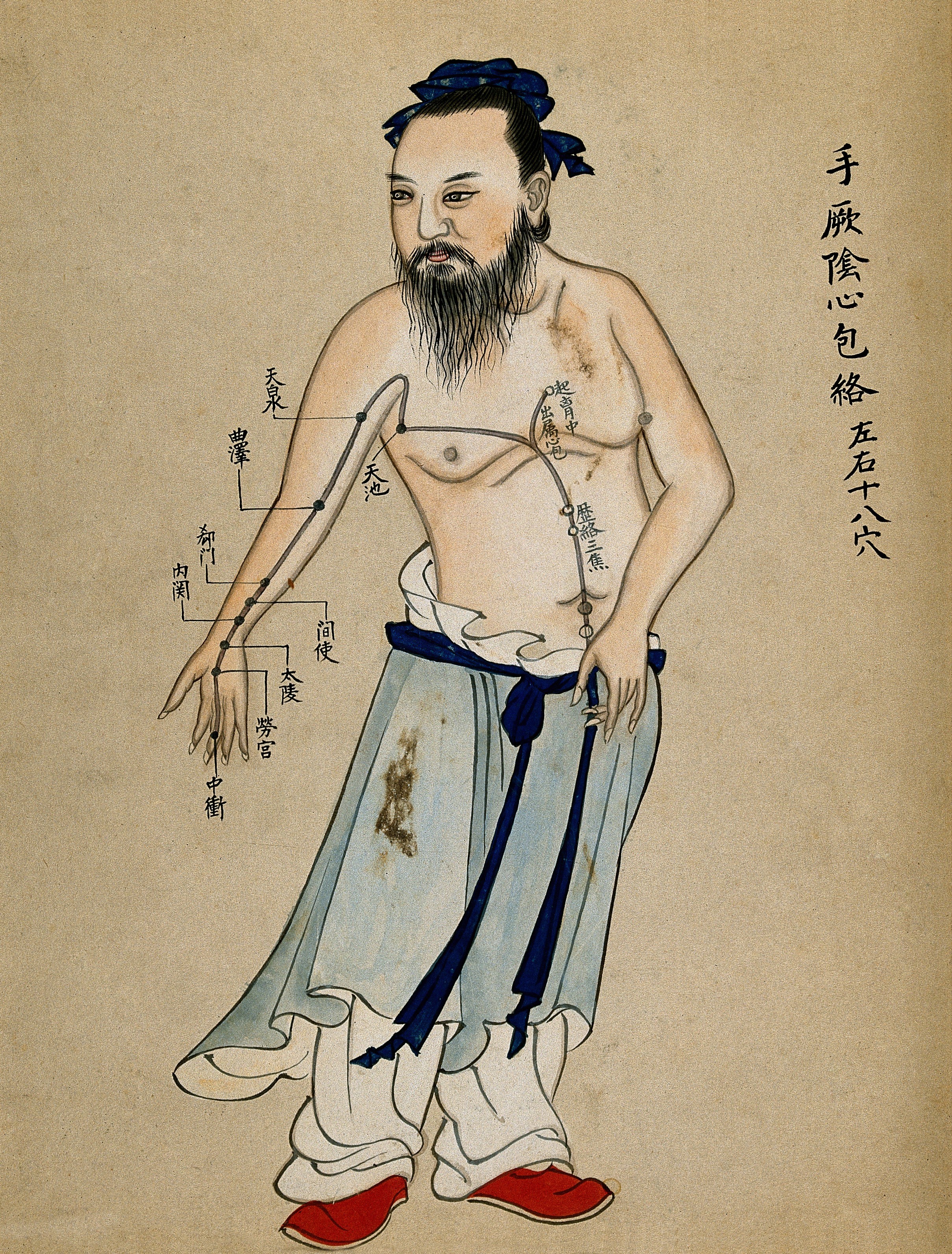
In practice, when the heart is full and the chest tight, I ask for circulation, often by looking to engage the liver’s function of dredging and draining. The liver stores and distributes blood and is paired with the pericardium channel in the concept of Six Layers. We call the pericardium 心抱 - heart sac. Its protective layer is crucial for the heart. It also operates the heart’s blood supply by holding the coronary blood arteries that reside in the subepicardial fat, which is deep to the visceral layer of the serous pericardium.
To invite heart (spirit) clarity, we must first create space through circulation.
Sovereignty and the Heart
When we speak of the heart as sovereign, we're speaking of personal sovereignty – the capacity to know ourselves clearly and respond authentically to what life presents.
True sovereignty means maintaining healthy connection while holding healthy boundaries. It means being able to witness the world's drama without being consumed by it. It means, as my Hawaiian teacher explained, "bringing your body conveyance from the head to the here of the heart."
In practical terms, sovereignty shows up as certainty in our service. Not certainty about outcomes, but certainty about what we're here to offer. For some, this is music. For others, it's knitting sweaters for penguins affected by oil spills. You can’t make it up. It’s yours.
Heart Skills: What the Heart Already Knows
The philosopher Mengzi (Mencius), writing during China's Warring States period – a time of tremendous conflict and upheaval – observed four innate qualities of the heart:
"The heart of compassion is the sprout of benevolence. The heart of shame is the sprout of righteousness. The heart of courtesy is the sprout of ritual. The heart of discernment is the sprout of wisdom."
What strikes me about this, especially in our own turbulent times, is Mengzi's conviction that these capacities are innate. We don't need to acquire them. We need to uncover them. Despite all the cruelty, Mengzi was convinced that the goodness of one’s heart shows up spontaneously, and that by nature, the human heart is made uncomfortable at the sight of others suffering.
To restore trust in ourselves, we follow joy.
When the Heart Is Lost: Seeking and Returning
Mengzi also asked a question that resonates across millennia:
"The purpose of learning is nothing other than to seek the lost heart."
The Chinese term for this is 求心 (qiú xīn) – seeking or beseeching the heart. It implies that something essential has been misplaced, not in some distant paradise, but in the ordinary course of living.
In my practice, I see this loss daily. Patients who can list their symptoms but not their longings. Who know their diagnosis but not their truth. Who have been so thoroughly trained to live from the head that the heart's voice has grown faint.
The work of returning is gentle but persistent. Sometimes it begins with a simple question: What scent ignites you? Saffron, rose, lotus – these aren't just medicines for the body but doorways for the Shen, ways of waking what has been asleep.
Clinical Applications: Supporting the Heart
For those interested in how this translates to treatment:
The Shen responds to points that calm and clarify. When insomnia stems from heart blood deficiency, we nourish. When dreams are agitated from heart heat, we clear. When the spirit simply needs support to return home, we anchor.
The Heart's relationships matter enormously. The heart and kidneys must communicate, fire and water must be kept in balance. When this connection fails, we see insomnia, anxiety, palpitations. Lotus seeds, gentle and calming, can help restore this dialogue.
The Pericardium deserves mention as the heart's protector. When trauma or overwhelming emotion has touched the heart too directly, we work through the pericardium channel first – creating safety before asking the heart to open.
Reflect & Experiment
If you're sitting with your own relationship to heart, here are questions that may guide you:
What ignites you? (Follow the scent, the spark, the unexpected joy.)
Where do you feel certainty in your service – however small or unconventional?
Where do you return to when you want to feel? Not in an emotional sense, but in the sense of achieving clarity or emptiness. It can be any place real or imagined, whether it's a forest, river, or lake — or your car.
Three herbs for the spirit:
Rose buds, for many invoke the shen. They are also an easy way to combat stagnation and aid the process of circulation. Get ones suitable for culinaric use and brew them either alone or add them to black or green tea.
Saffron is a very powerful shen lifter. While currently under examination as a plant-based antidepressant, Asian households and medicines have long utilised this valuable spice to expel lethargy and dark moods.
Lotus seeds are a staple in many recipes of Chinese medicine. They are more calming and gentle than Saffron, for example, and can aid the treatment of insomnia (if related to heart/kidney dysbalance)